Case Study · House of Worship
Grace Community: an 11-day sanctuary transformation.
A 1,400-seat sanctuary with a 30-year-old PA, a 2.6-second reverb tail, and a volunteer team that dreaded Sunday morning. Here's how we rebuilt the room — between services.
The room before
Grace Community had outgrown its original audio system. A pair of point-source boxes flown center-cluster couldn't cover the wings; volunteers compensated by pushing the mids hot, which lit up the room's untreated plaster walls. Speech intelligibility (STI) measured at 0.42 in the back third — well below the 0.55 threshold for comfortable comprehension.
The lighting rig was four PAR cans on a single dimmer pack. The projection screen washed out under sunlight from the clerestory windows. And the FOH console was an analog board with handwritten gain markings — only two volunteers knew how to run it.
The plan
- Compact dual line arrays (8 boxes per side) for even coverage front-to-back.
- Acoustic treatment: 38 fabric-wrapped panels matched to the existing wood stain, plus four ceiling clouds.
- A 4.5m × 2.5m fine-pitch LED wall replacing the projector.
- 16-fixture moving-light rig on a hidden truss above the choir loft.
- Digital console with three saved scenes: Sunday Service, Midweek, and Concert.
- iPad-based volunteer control with one-touch presets and a printed quick-start.
The before / after
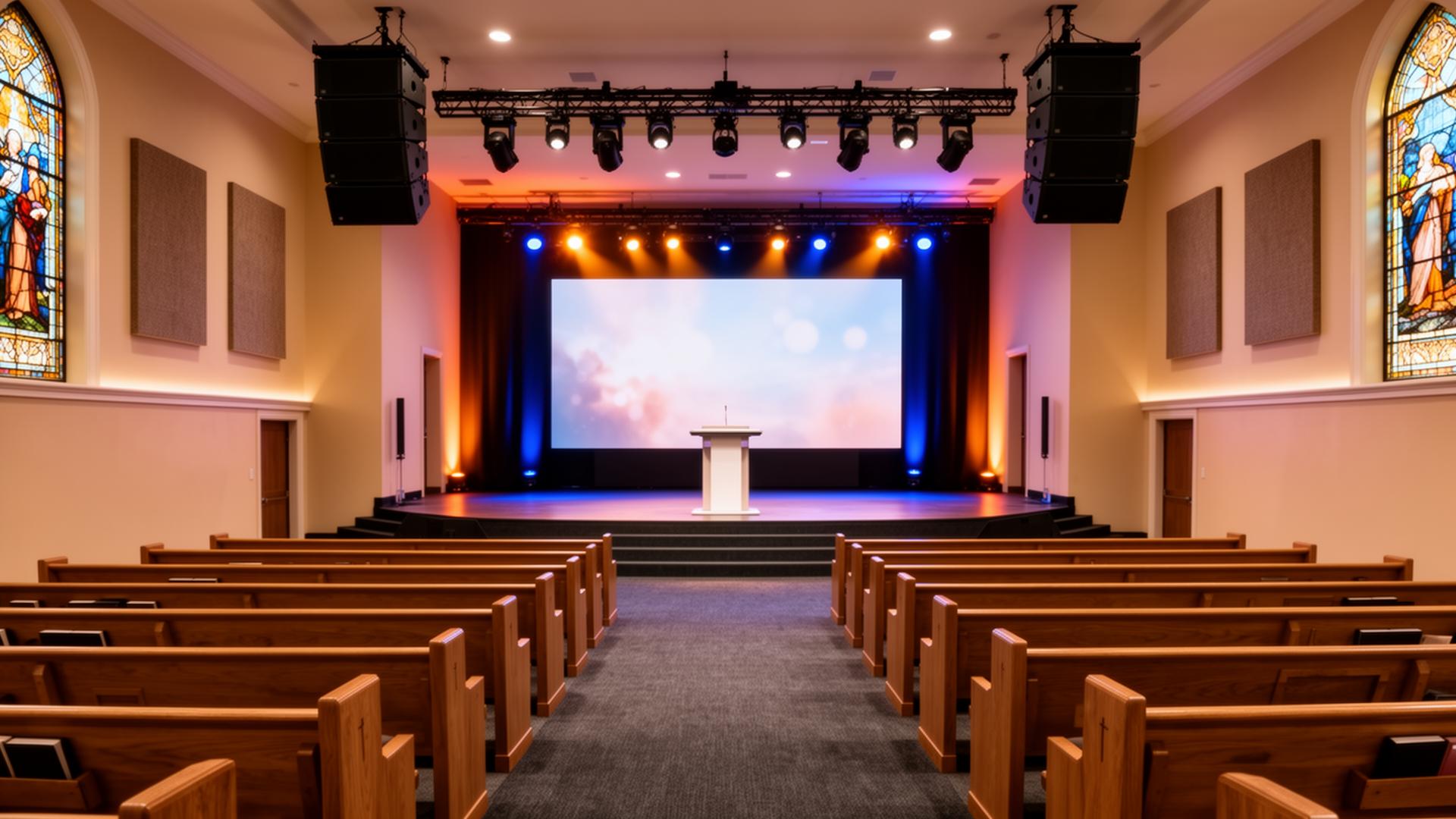
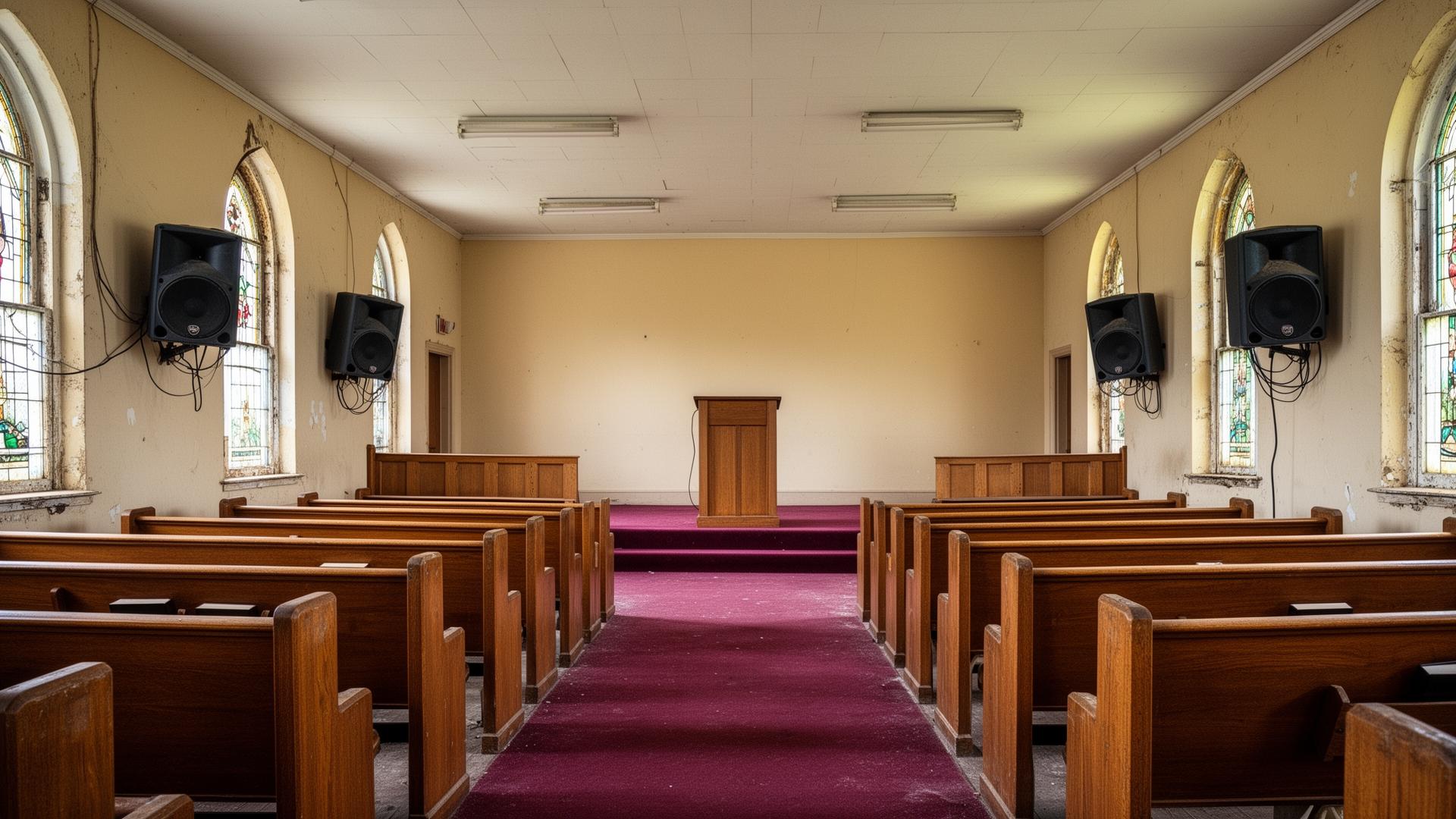
Drag the slider to compare the original setup with the SyncLive install.
The outcome
Post-install measurements: RT60 dropped from 2.6s to 1.1s in the speech range. STI in the back row improved from 0.42 to 0.68. The volunteer rotation grew from 2 people to 9 within the first quarter — a direct result of the iPad presets and printed runbook.
"For the first time in 20 years, the back row hears the same mix as the front. And our Sunday volunteer rotation actually enjoys running tech."
Want a room like this?
Book a site assessment and we'll arrive prepared, with measured baselines and a roadmap tailored to your sanctuary.
Book your assessment →